

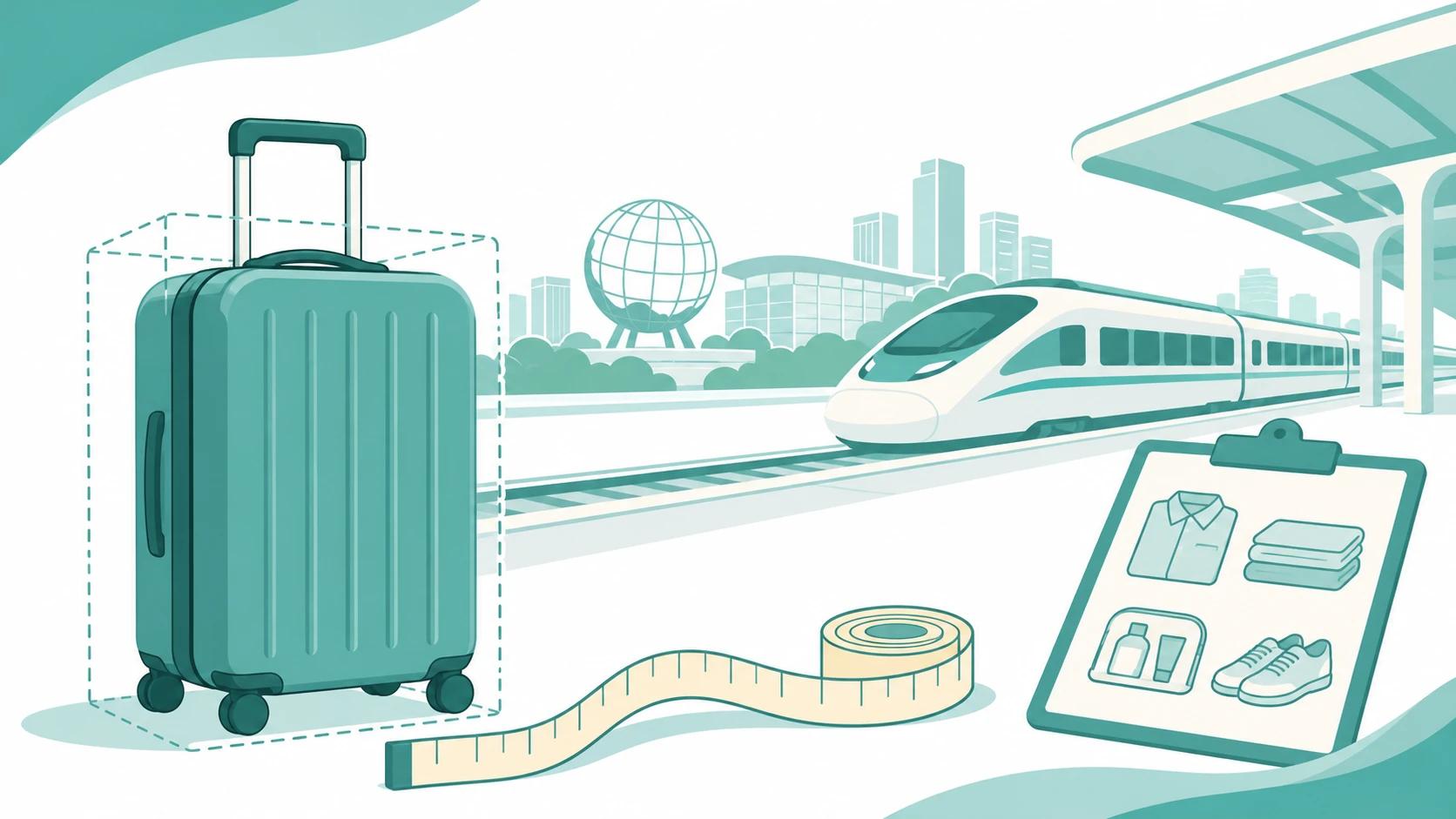
Before booking a high-speed train for your Yiwu visit, measure each suitcase’s outside length, width and height and check the party’s weight allowance. China Railway 12306’s English FAQ gives a 130cm combined-dimension limit per item for EMU trains, a 20kg maximum per item and a 20kg free allowance for an ordinary adult passenger. If your case exceeds the published limit, resolve the arrangement with the official channel before relying on that journey.
Key Takeaways
- Airline checked-baggage acceptance does not establish rail acceptance.
- Use the actual outside measurements rather than a suitcase size label.
- Check item dimensions, item weight and passenger allowance separately.
- Reports of permissive boarding are not operator permission.
- Do not assume your selected train offers checked-baggage service.
Rail-travel overview by Asian Train Guide; its published description includes luggage rules. The official written limits govern this article; no oversized-bag acceptance is established by the video. Playback has not been manually verified.
Load related video
Measure the case you will actually bring
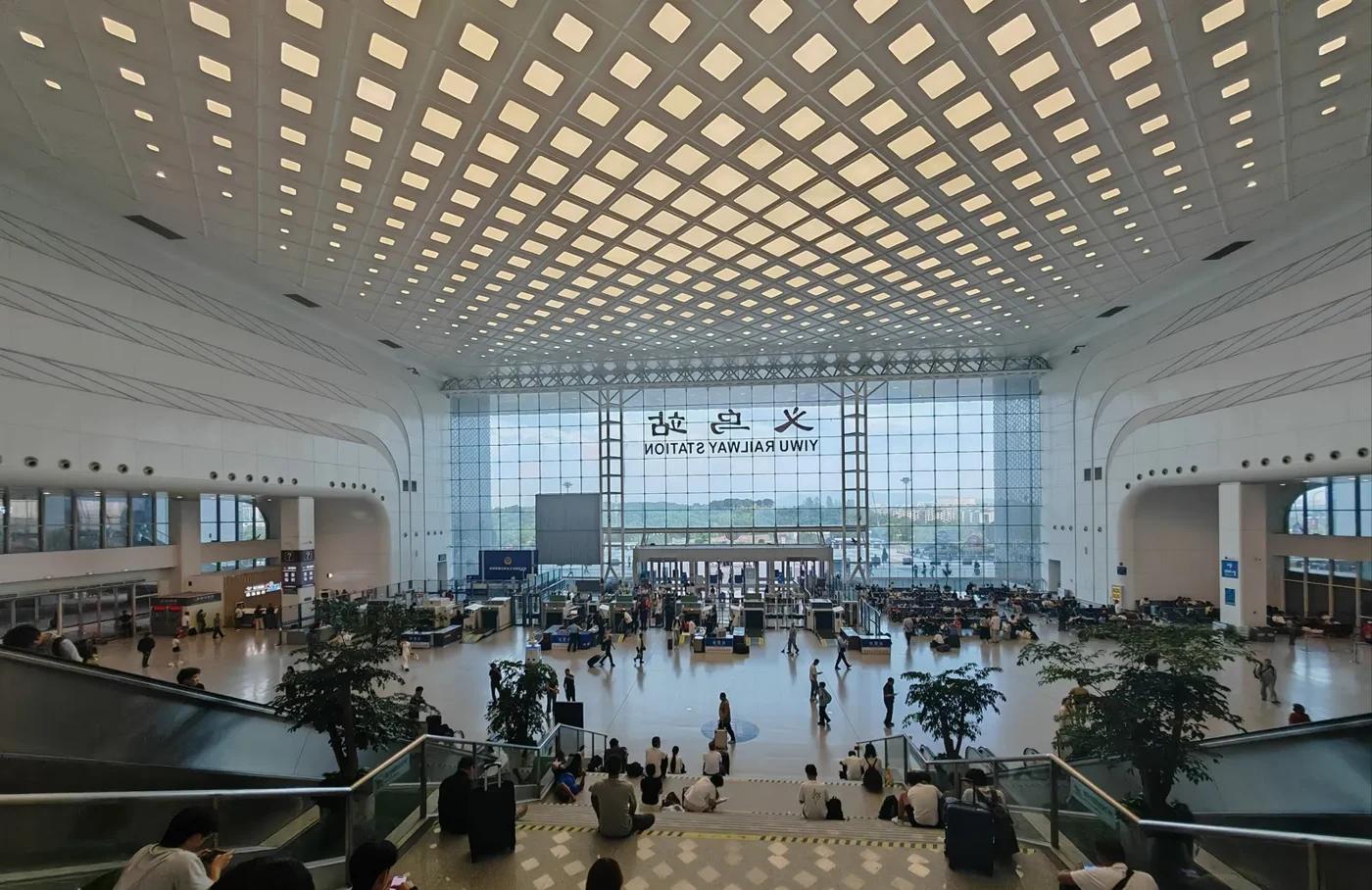
A suitcase described as 28-inch or airline approved does not provide the three outside dimensions needed for the railway check. Measure the actual case, including its protruding wheels and handles, and record the length, width and height. If it expands, measure it in the packed configuration you intend to use. Then weigh each piece and record what each passenger will carry.
The 12306 English FAQ separates passenger free allowance from the maximum weight and dimensions of each item. For ordinary adult passengers it lists a 20kg free carry allowance. It lists 20kg as the maximum per item and 130cm combined dimensions for EMU trains. Its different traditional-train dimension rule should not be used to justify an oversized case on a high-speed EMU journey.
Confirm the current operator and selected-train instructions through the official booking or station channel, particularly where the route or service differs. A fare class upgrade should not be treated as an increase in the stated baggage allowance unless the applicable instructions expressly establish it.
Two suitcase calculations that change the plan
These are hypothetical planning measurements, not observations from a station. Case A measures 55 × 40 × 23cm and weighs 12kg. Its combined dimensions are 118cm. For an ordinary adult travelling with that case alone, the stated dimension and weight screens pass. That does not reserve luggage space or settle restrictions on its contents.
Case B measures 75 × 50 × 30cm and weighs 18kg. Its combined dimensions are 155cm: 25cm above the stated EMU item limit. The weight being below 20kg does not remove the dimension issue. The useful outcome is to change the packing plan or obtain an official resolution for the intended journey before making the itinerary depend on it.
Countercheck: reduce Case B’s weight to 14kg without changing its dimensions. It remains 155cm, so the size outcome does not change. Likewise, splitting a passenger’s heavy load into individually lighter bags does not automatically resolve the passenger’s total free allowance. Keep all three screens visible instead of letting one favourable number stand in for the others.
Why reports of easy boarding do not settle your case
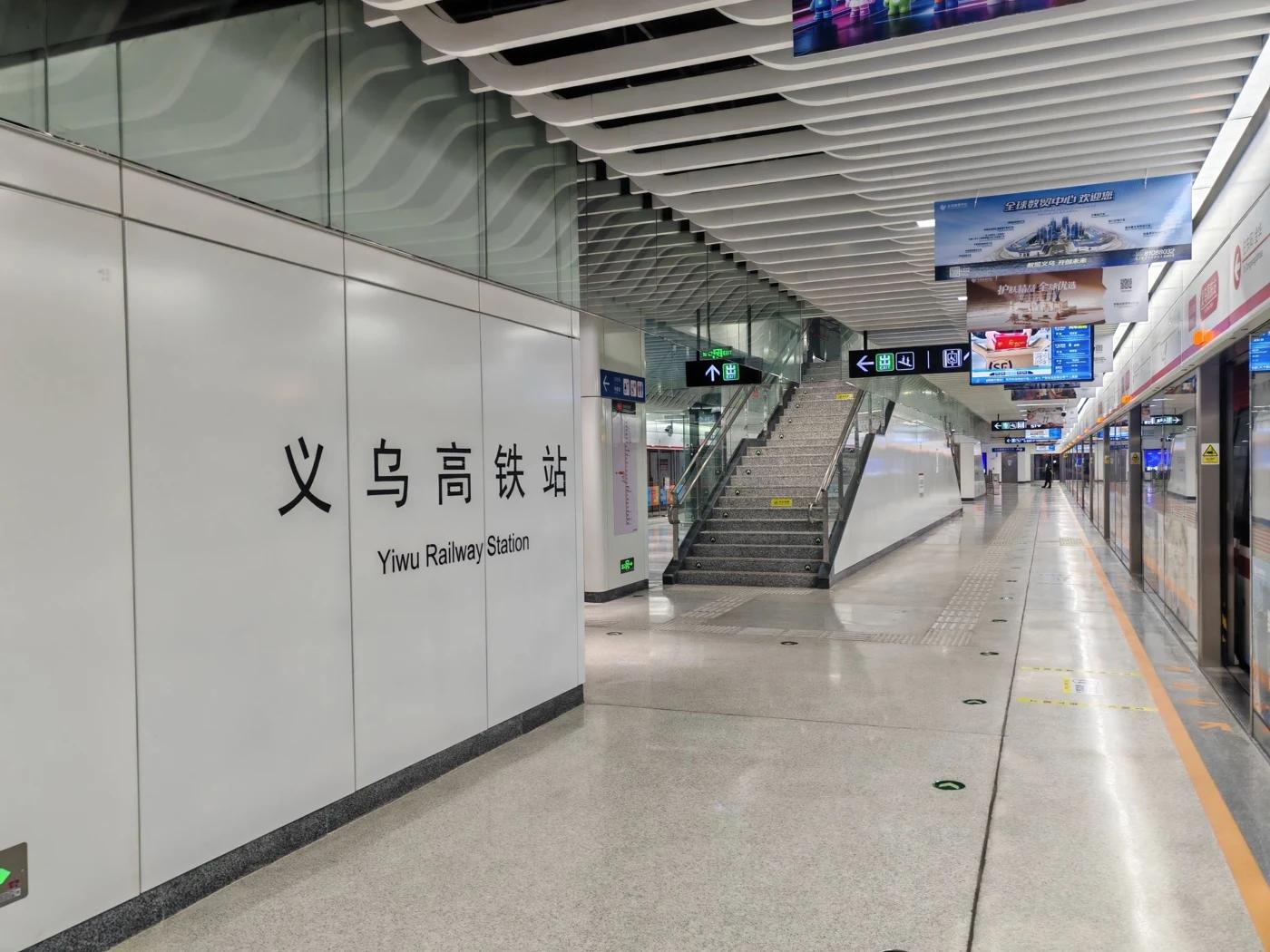
Public travel discussions include people reporting that large cases were accepted without measurement. That describes their experience. It does not change the operator’s published limit or establish what staff will permit for your case, station and train. A plan built on “nobody checked last time” carries an unresolved condition into a timed connection.
The problem is especially costly when rail is only one part of an arrival day. If you land in Shanghai with an airline checked-size case, you may have already committed to a Yiwu hotel or appointment. Discovering the luggage issue at the station can leave both the rail booking and onward arrangements difficult to change. Resolve the case before paying for a tightly connected itinerary rather than adding a few minutes to the station buffer and assuming that solves it.
Choose a confirmed option before booking around the train
If you can repack, select bags that meet the relevant dimensions and weight rules and remeasure them when packed. Keep essential medication, travel documents and valuables accessible and check the railway restrictions on contents separately. Repacking is only complete when the actual carried items pass the applicable checks.
If you must bring the larger case, give the official railway channel your travel date, origin, destination, proposed train and actual bag dimensions and weight. Ask what arrangement is permitted for that specific journey and what must be booked or done in advance. Keep a record of the response and its scope. A general article about luggage consignment does not prove that the selected high-speed train accepts checked luggage or that the service will deliver when you need it.
Where no suitable rail arrangement is confirmed, compare an alternative transport plan with a provider who has accepted the actual bag count and dimensions. Check passengers, luggage capacity, pickup point, destination, scope and price together. A vehicle category alone does not demonstrate enough usable luggage space. This guide does not confirm a transfer provider or freight service.
| Hypothetical item | Dimension sum | Size screen |
|---|---|---|
| 55 × 40 × 23cm | 118cm | Within stated130cm EMU item limit |
| 75 × 50 × 30cm | 155cm | 25cm over stated limit |
| Same large case at14kg | 155cm | Still over size limit |
Join the luggage decision to the Yiwu itinerary
Once the luggage route is settled, update the complete airport-to-train budget. Extra bags can affect walking, loading and handling, but a longer allowance cannot cure an unresolved baggage permission. Use the separate Shanghai-arrival connection guide for timing and the Yiwu transport guide for local journey planning.
Keep one private trip note: passengers, date and train, bag count, outside dimensions and weight, applicable instruction, any official arrangement, and the fallback if that arrangement is unavailable. Recheck it when the train or luggage changes. Do not send passport scans to a general travel enquiry merely to ask about bag handling.
For help fitting transport into your wider Yiwu visit, send a travel-planning enquiry with dates, party size, route and the practical luggage question. Ask what help is available and obtain an agreed scope before booking. The enquiry does not reserve a rail ticket, checked-baggage service, luggage porter or vehicle.
Ask about your Yiwu travel plan
Related: Shanghai arrival connection guide.
Related: Yiwu transport guide.
Related: Yiwu visitor itinerary planning.
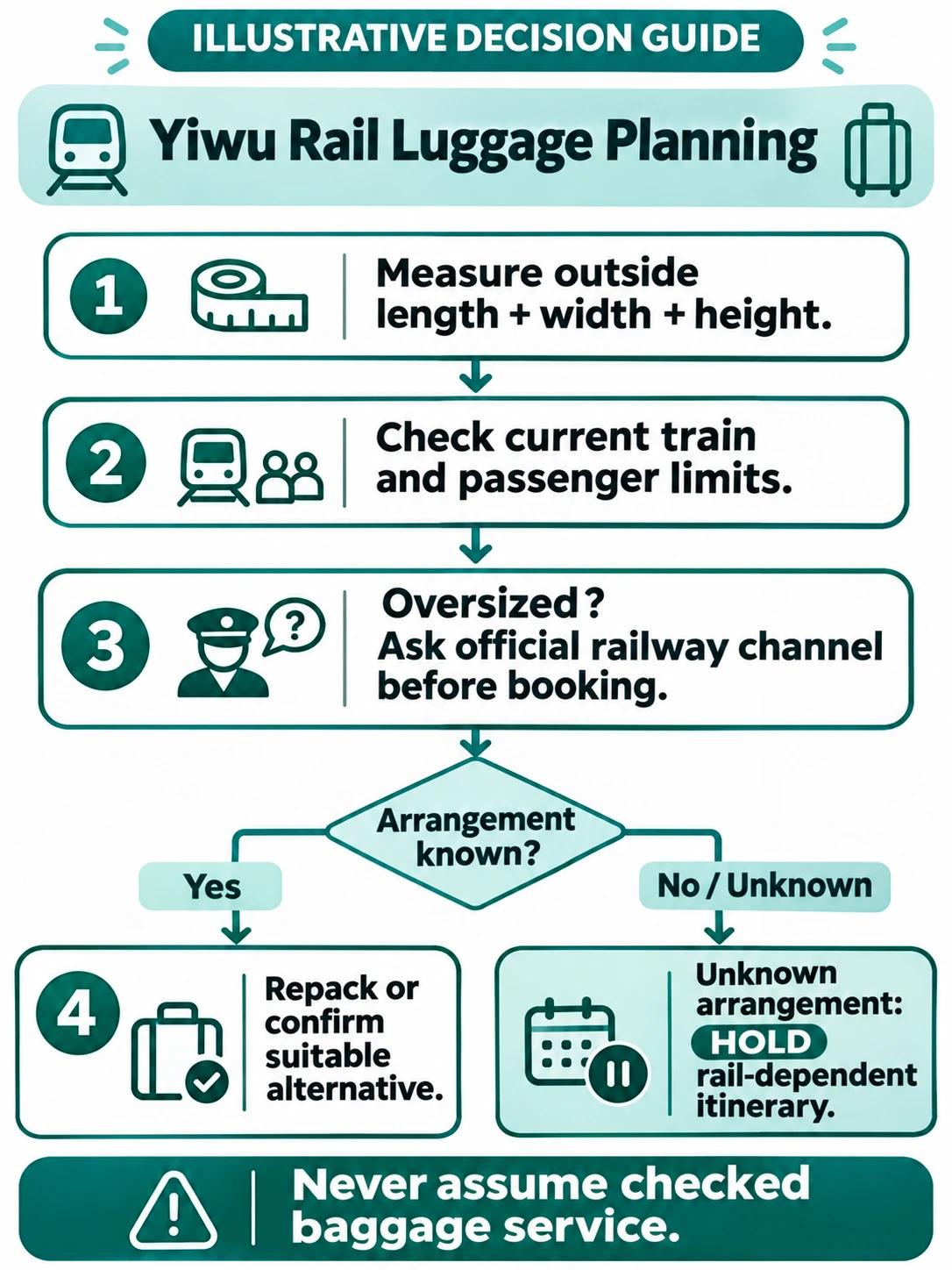
- Yiwu rail luggage planning
- 1 Measure outside length + width + height
- 2 Check current train and passenger limits
- 3 Oversized? Ask official railway channel before booking
- Unknown arrangement: HOLD rail-dependent itinerary
- 4 Repack or confirm suitable alternative
- Never assume checked baggage service.
| Trip-note field | What to retain |
|---|---|
| Actual packed bags | Outside dimensions and weights |
| Train identity | Date,origin,destination and service |
| Oversized resolution | Official response and fallback |
Conclusion
Measure first, check the separate limits and resolve any oversized case before building the Yiwu journey around a train. A confirmed luggage plan gives the timing plan something dependable to work with; anecdotal acceptance does not.
Frequently asked questions
Does a 20kg suitcase automatically qualify?
No. Item dimensions and the passenger’s total free allowance also apply.
Can I rely on comments saying large cases are accepted?
Treat them as personal experiences. Resolve an oversized case through the official channel for your selected journey.
Can my checked airline suitcase go as checked train baggage?
Do not assume so. Confirm a suitable service, its booking conditions and delivery timing for the actual route before relying on it.
Sources
Research-based guide. Visitor reports are attributed; this article does not imply an in-person test.