

If you board the wrong train or pass your stop on an ordinary mainland China Railway journey, tell train or station staff immediately, before leaving the station. Ask staff to record the mistake and arrange the permitted return. Do not board another train on your own: the route, destination and class must come from the railway. A case first raised after station exit is not accepted under this return provision.
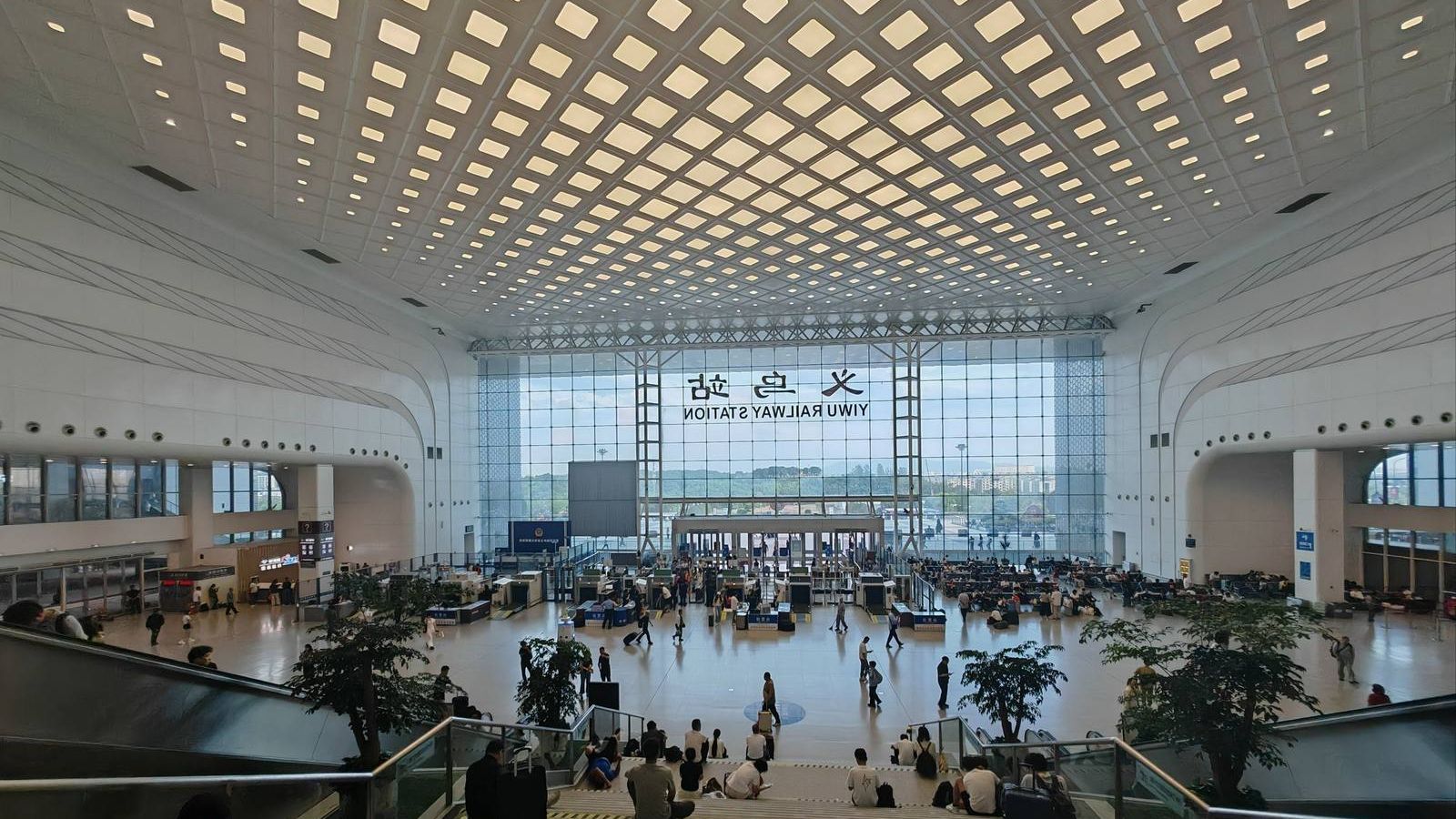
The distinction matters when a ticket still says Yiwu but you are somewhere else. Your next action is to show railway staff the ticket and explain what happened. Buying another ticket, finding a taxi or messaging your hotel can wait until the railway has addressed the rail journey.
Key Takeaways
- Report wrong boarding or mistaken alighting to railway staff before station exit.
- A staff record and arranged return are different from permission to take any train.
- The ticket destination and original boarding station are separate possible return endpoints.
- A same-city alternative requires no return train that day and your consent.
- Direct continuation, refusing the arrangement, changing class or leaving the return en route can change what you pay.
- Update a pickup only after staff confirm the actual arrival station.
Railway context video: foreign-passport check-in and boarding
Ethan Wandering Wonders: ordinary station and boarding context. This video does not establish wrong-stop recovery rules or your return arrangement. Playback has not been manually verified.
Watch the original video on YouTubeTell railway staff before leaving the station
On the train, find a member of the crew and show your issued ticket and the identity document used for the journey. If you have already alighted by mistake, tell station staff while you are still inside. Give the intended station, not just the city, and say whether you boarded the wrong service, left too early or travelled past the stop.
Articles 37–38 of China State Railway Group’s passenger rules set out the handling of wrong boarding and wrong alighting. The displayed rules took effect on 1 June 2026 under Article 115 and apply to the group’s specified mainland railway operators. This guide does not apply those provisions to a metro, flight or cross-border service.
The Shanghai government’s January 2025 English explanation already describes the staff record and handoff. The current rule supplies the exact conditions below. Neither page turns an original ticket into a replacement boarding pass chosen by the passenger.
If you never boarded because you reached the wrong departure station or missed departure, that is a different ticket-change problem. Show the original order to the railway or issuing channel. The recovery provision here is not a promise of a refund or free replacement for a missed departure. Use the Yiwu arrival guide for ordinary route and ticket preparation.
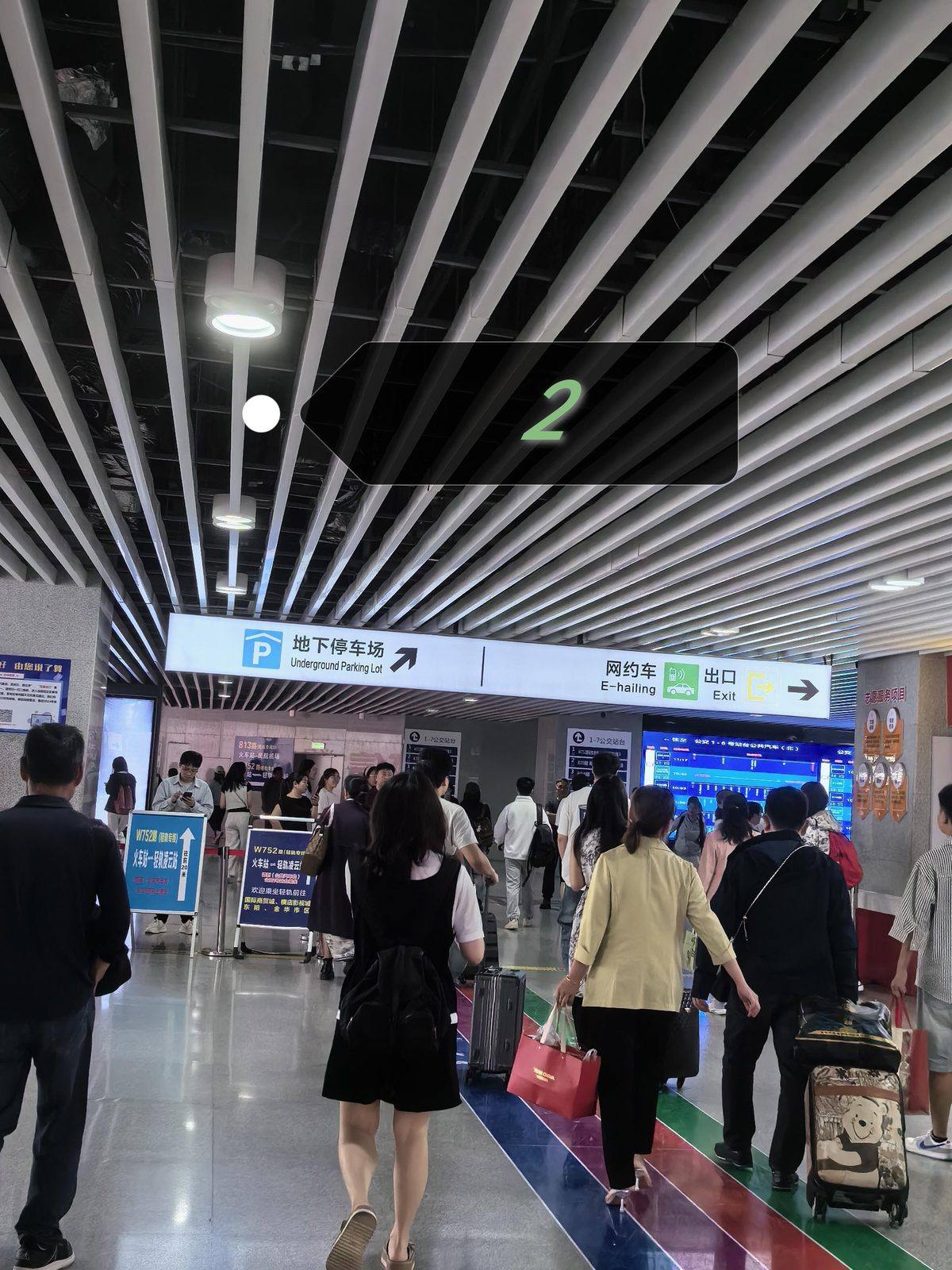
Use the branch that matches where you are
Where you are changes whom to tell. Staff need the original journey and the mistake before they can identify the proper handling. “I missed my train” can mean you never boarded; “I passed my stop” means you are already travelling beyond it. Use the more precise description.
| Situation | Tell | Ask staff to establish |
|---|---|---|
| Aboard the wrong train | Train crew now | The passenger-service record and station handoff or permitted onward handling |
| Still aboard after your ticketed stop | Train crew now | Where staff will hand you over and arrange the return |
| Alighted at the wrong station, still inside | Station staff before exit | The recorded mistake and arranged journey to the correct endpoint |
| Already outside when first reporting it | Railway staff or official support | An onward option; this provision does not accept a case first raised after exit |
Article 37 directs the conductor to prepare a passenger-service record for a station ahead. Station staff handle passengers they identify locally or receive from the train. Follow the handoff they give you. If the instruction is unclear, show the ticket again and ask which station, train and class the arrangement uses before moving to another boarding queue.
A public traveller’s October 2019 account describes missing a Hangzhou stop, showing a ticket, receiving a staff-written note and being passed to another station employee for the return. It illustrates the language problem and the value of keeping the handoff together. It is an unverified self-report, not NiceYiwu’s trip, evidence of current waiting times or proof that every case ends the same way.
Follow the destination and class staff arrange
Under Article 37, station staff designate the nearest train for a free return to the ticketed destination or the original boarding station. Those are different endpoints. Ask which one applies to your actual arrangement; a return toward the starting point is not the same as arrival at the destination where a driver is waiting.
The rule includes a specific alternative. If no train that day can return you to either applicable station, staff may send you to a station in the same city with your consent. It does not let you choose any station because it is convenient, and it does not establish that a particular alternative exists for Yiwu. If one is offered, get its exact name and decide whether that endpoint works for your onward plan.
Keep the class staff assign. Article 38 requires passengers on a free return to travel in the railway-designated class and not alight at an intermediate stop. The arrangement is a recovery journey, not an opportunity to add sightseeing or use a more expensive seat. Ask before changing either part.
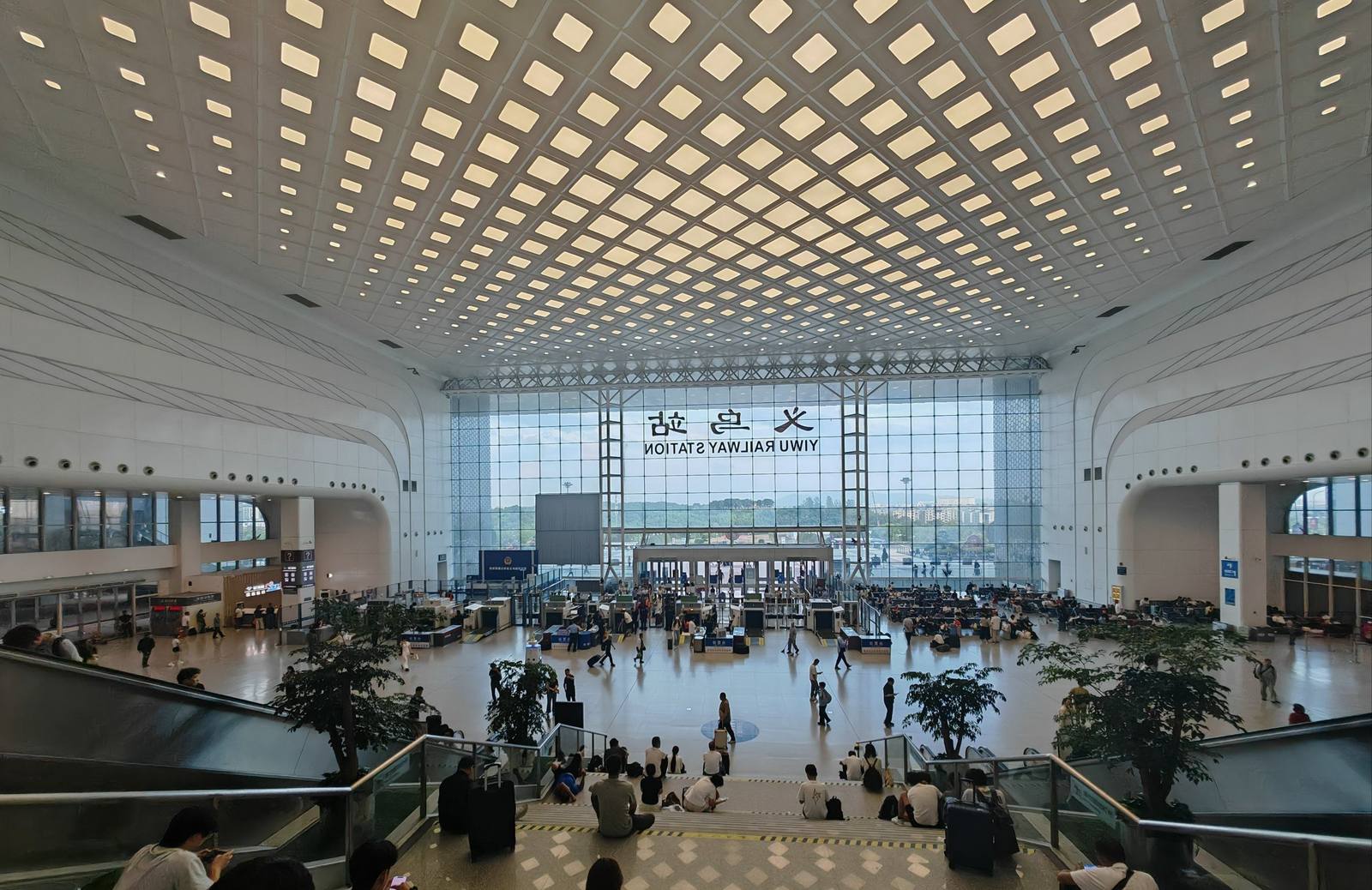
Save the railway’s actual instructions together: intended endpoint, arranged train, boarding instruction and class. Keep the original ticket and any issued record available. A timetable search may help you understand an instruction, but it cannot replace that instruction or reserve space. This guide promises no departure time, seat or same-day arrival.
When your choice changes the fare
A free return and continuing on the wrong train are separate branches. If that train reaches your original destination and you ask to continue on it, Article 37 says a higher fare difference is collected; a lower difference is not refunded. Ask staff whether the service and ticket can be handled that way. Do not decide to remain aboard merely because a map shows the right city ahead.
| Your choice | Consequence in Articles 37–38 |
|---|---|
| Request direct continuation on the wrong train to the original destination | Pay a higher fare difference; a lower difference is not refunded |
| Refuse the railway’s arrangement | Additional fare is collected for the actual section travelled; the unused section is not refunded |
| Alight en route during the free return | Fares for both directions of the free-return section are collected according to the return train’s class |
| Request a higher class on the free return | Pay anew for the requested higher class |
The before-exit boundary is different from a fare option. If the case is first raised after you leave the station, Article 37 says it is not accepted under that provision. Do not treat the original ticket as authority to re-enter and take a free train back. Ask the railway about the route and ticket now needed.
These conditions are why the first conversation should be with railway staff. Once they explain the actual arrangement, you can compare it with your destination and decide whether to accept it. An assumption about a cheap replacement ticket cannot tell you what the unused part of the original journey is worth.
Keep a short message and replan the arrival
These are editorial translations for asking staff, not an official railway script or proof that your case has been accepted. Show only the message that matches what happened, together with your original booking details.
| English | Chinese to show |
|---|---|
| I boarded the wrong train. Here is my ticket. Please help me contact the conductor. | 我上错车了。这是我的车票,请帮我联系列车长。 |
| I passed the station on my ticket. I have not left the station. Please tell me how the railway will arrange the return. | 我坐过了车票上的到站。我还没有出站,请告诉我铁路会怎样安排送回。 |
| I got off at the wrong station. I have not left the station. Please help me. | 我下错站了,还没有出站,请帮帮我。 |
| Please confirm the exact arrival station, train and class for this arrangement. | 请确认这次安排的具体到站、车次和席别。 |
Use “I have not left the station” only when it is true. If you are still on the train, explain that directly to the crew. A translated sentence cannot change which branch applies, and it does not replace the record staff prepare.
Teaching example, not a booking or passenger case: assume a visitor’s issued ticket ends at Yiwu, the visitor mistakenly alights elsewhere and remains inside that station. The visitor shows the ticket to staff before exit. Staff record the mistake and arrange the permitted journey to the endpoint they confirm. The traveller follows that train and class, then updates the pickup from the confirmed destination. No train number or available seat is assumed here.
Now change one condition: the traveller leaves the station first and only then reports the mistaken alighting. The same ticket and intended destination remain, but the Article 37 acceptance condition no longer holds. The reader must ask about a new onward option rather than claim the earlier free-return branch. Changing the pickup alone cannot repair that difference.
If staff offer a consented same-city endpoint under the no-return-train-that-day condition, the ground journey also changes. Confirm the proposed station before agreeing, then tell the driver or hotel that exact station. “Back in the city” does not establish that the original pickup point is still correct.
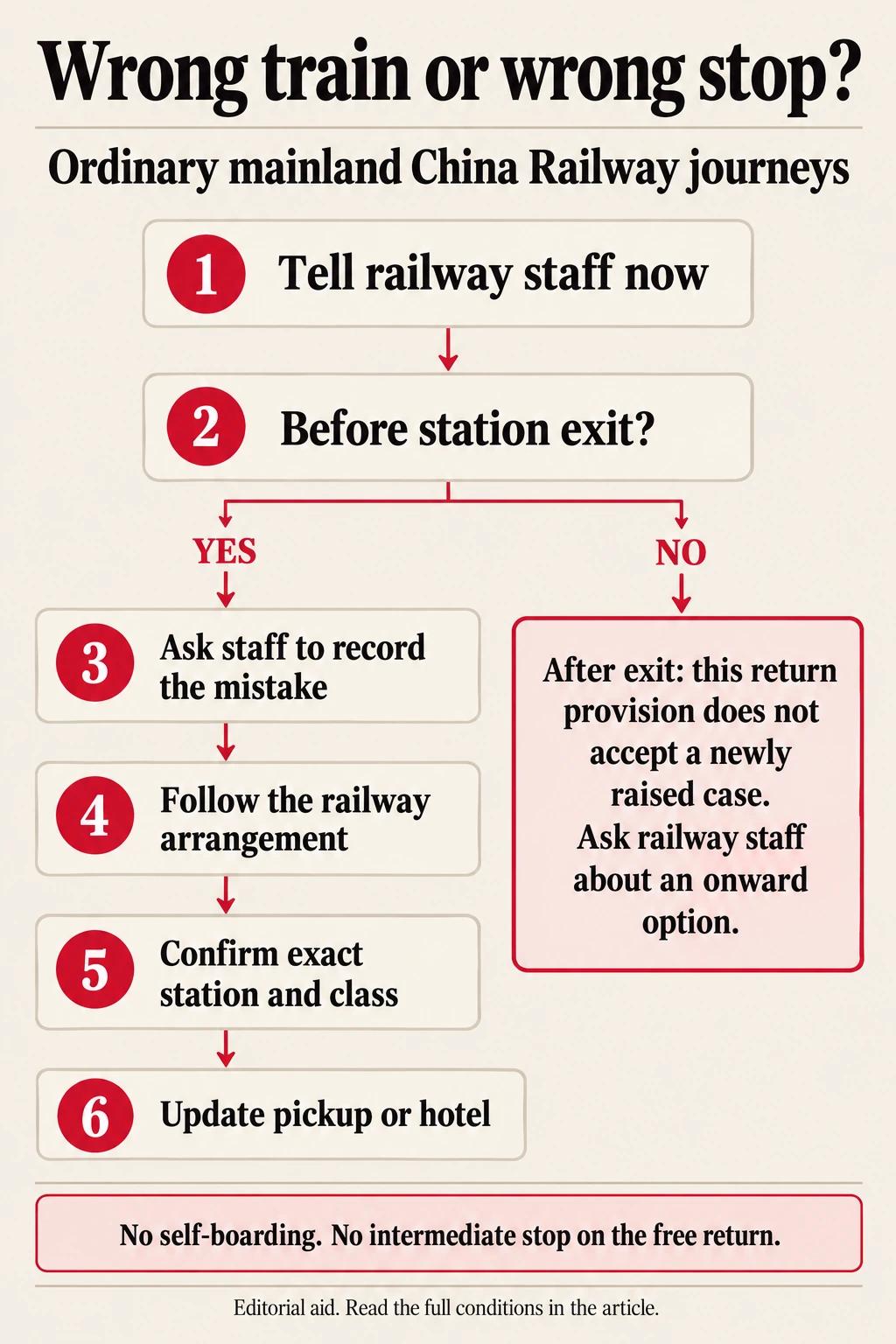
Use this recovery sequence
- Tell railway staff now that you boarded or alighted by mistake.
- Establish whether you are still before station exit. A case first raised after exit is not accepted under this return provision; ask about an onward option.
- While still inside, ask staff to record the mistake and explain the handoff.
- Follow the railway’s actual arrangement rather than boarding another train yourself.
- Confirm the exact destination, train and class. Keep the direct-continuation, refusal and return-leg conditions above in mind.
- Update your pickup or hotel from those confirmed details.
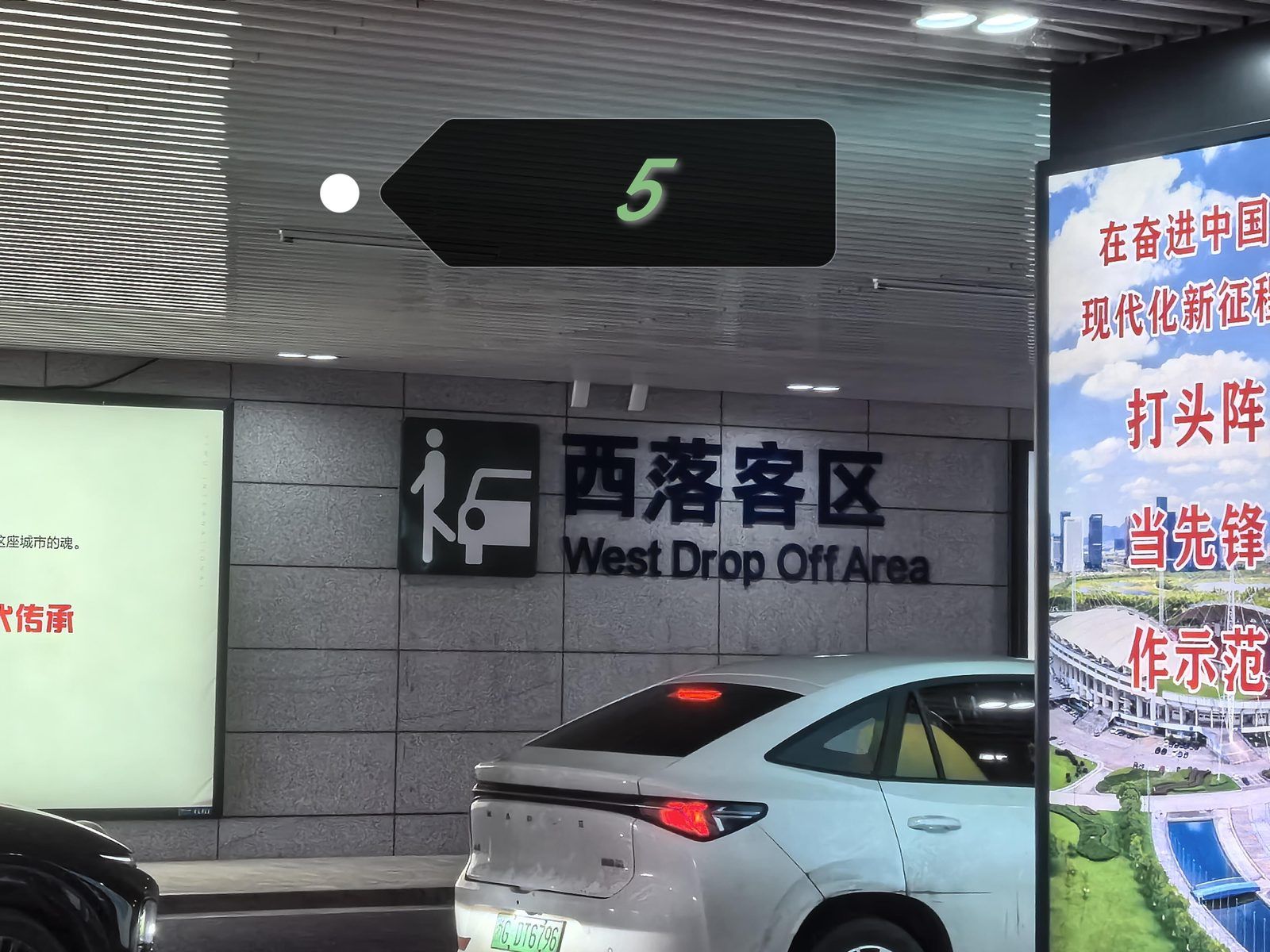
For an arrival at Yiwu Railway Station, the station-to-market guide owns the ordinary onward choices. Use it only after establishing that this is the station you will actually reach. For the wider visit, return to the Yiwu travel planning hub.
Ask about your changed Yiwu arrival with the railway-confirmed station, revised date and arrival information, party size and the practical pickup or hotel question. NiceYiwu’s enquiry is for travel communication and logistics after the railway decision. It does not act as a railway emergency desk, issue the recovery record or guarantee a ticket, seat or vehicle. Availability, scope and any fees need separate confirmation.
Conclusion
Keep the mistake inside the railway’s handling process: tell staff before exit, retain the record and follow the destination and class they arrange. If you want a different route or class, ask what changes before accepting it. Replan the pickup from the confirmed endpoint, rather than the station you originally hoped to reach.
Frequently asked questions
Can I take any train back with my original ticket?
No. Report the mistake and follow the railway’s recorded arrangement. The original ticket does not let you choose another train or class yourself.
What if I first ask for help after leaving the station?
Article 37 does not accept that case under its wrong-boarding or wrong-alighting return provision. Ask the railway about an onward route and the ticket required.
Can staff send me to another station in the same city?
The rule allows this with your consent when no train that day can return you to the ticket destination or original boarding station. Confirm the exact proposed endpoint before changing your pickup.
Is missing a departure covered by the same rule?
No. If you never boarded, ask the railway or issuing channel about your ticket’s change or refund options. This guide makes no free-replacement promise for that situation.
About this guide
Prepared by Justin, NiceYiwu. Public railway provisions checked 22 October 2026, Shanghai time. The 2025 English explanation and 2019 visitor account retain their own dates. This is researched guidance, not an in-person recovery test or a railway service offer.
Research-based guide. Visitor reports are attributed; this article does not imply an in-person test.
Sources & checks
- China State Railway Group passenger rules: Articles37–38 and115 · Checked 2026-10-22
- Shanghai government English wrong-train and wrong-stop explanation (2025) · Checked 2026-10-22